
Ruthlessly Simplify
The framework built out of frustration, and the studio decision that finally tested it

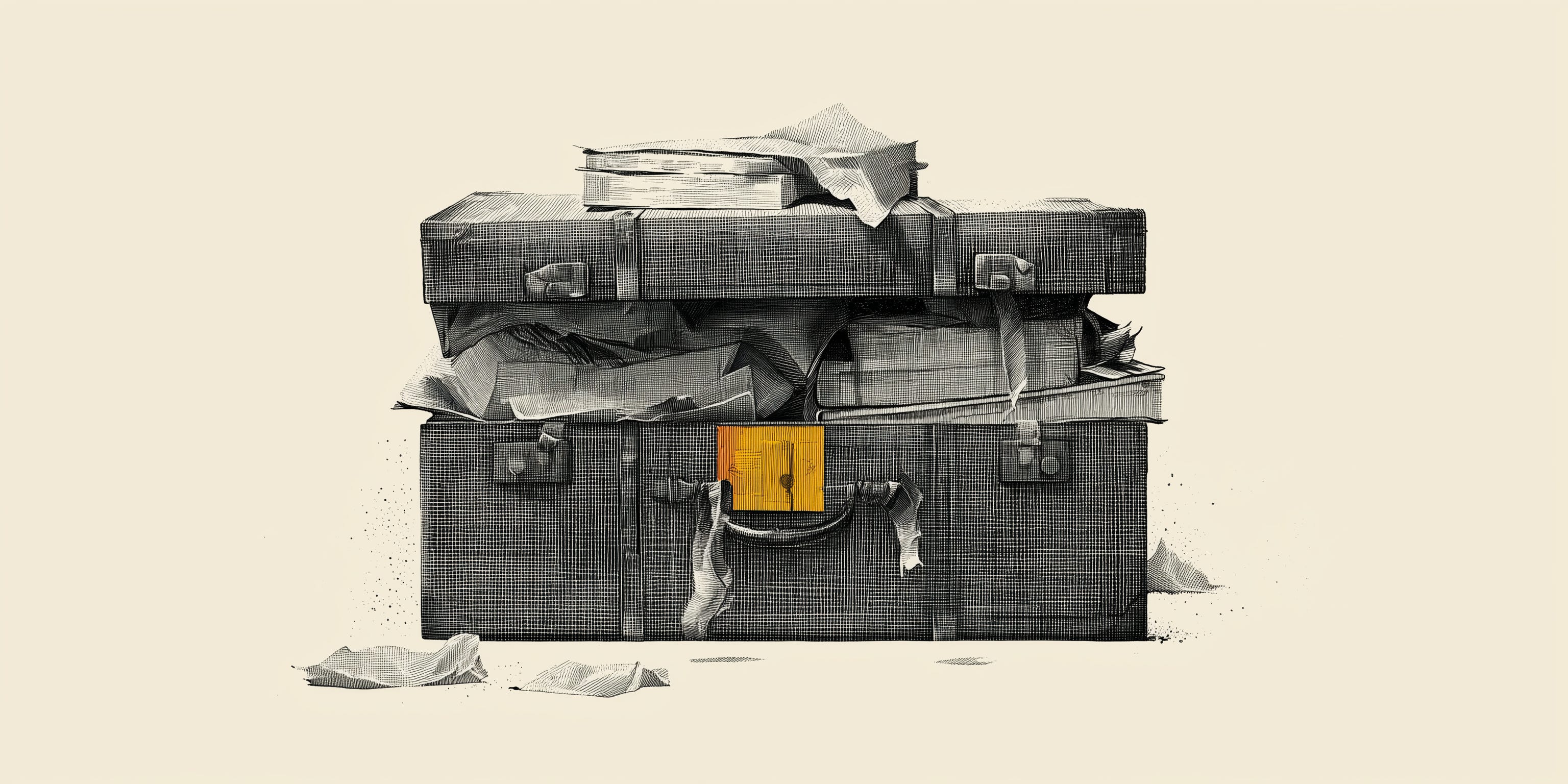
A few weeks ago I was trying to record a thirty-second intro for my latest podcast episode. Hit record, talk to the camera and move on with my day. Simple.
Except every single time I dug in, the audio came back garbled and basically unusable. Keep in mind, I run a podcast studio business. Delivering clean, top tier audio to clients is kind of the whole point so this wasn’t just annoying, it was maddening.
I sat there for an hour trying every fix I could think of and nothing worked. After five or six attempts, surrounded by a glut of cameras, lights, and recording gear, I just lost it. I texted my wife one sentence:
“I need to ruthlessly simplify my life.”
I didn’t plan to write that. It just happened in the moment out of pure frustration. But it unlocked something in me and that phrase has been running on repeat in my head ever since. So much so that it’s turned into an actual framework I’m judging decisions against, both personally and in my business.
So let’s back up, because the garbled audio wasn’t really the problem (obviously). It was just the final straw.
(and in case you’re curious…yes, I did finally figure it out 💪)
The More More More’s
If I look back in time through an honest lens, most of my professional frustration over the last 20+ years traces back to the same root cause: I’ve been a slave to equipment.
It started with guitars and amps, back when I was a working musician. Then I got into writing and producing records and added recording gear. Then I evolved into filmmaking and added cameras, lights, stands, and more cables than I care to keep track of. I figured if I wanted to do these careers right, I needed to have all the necessary tools at my disposal. I rarely got rid of anything along the way. I just kept piling things on.
This isn’t really about gear. If you’re running any kind of business right now, you’ve got your own version of the “more more more’s”. Maybe it’s not cameras. Maybe it’s the sixth AI tool you signed up for because someone on LinkedIn swore it would save you time. Maybe it’s a tech stack that’s gotten so bloated and out of control, you’ve forgotten half of what you’re even paying for, or a subscription you added “just to try it” eight months ago (I swear I’ve never done this). And isn’t automation supposed to make you more hands off? Then why do a lot of us dig ourselves a deeper hole trying to set all those systems up?
I said at the start of this year that my goal was to earn my first actual dollar from the internet, and get to a point where 40 percent of my income comes from nothing more than a laptop. In truth I still feel pretty far from that, and I think a real part of why is this exact pattern. I’ve always reached for another tool or system instead of asking what I could just get rid of.
This was never a “Drew-has-a-gear-problem” issue. It’s a “most-people-have-this-problem” issue.
Every week I write about creative entrepreneurship, the psychology of why we get stuck, and what it actually looks like to build something new in public. Free.
More Space for More Crap
A few weeks ago ruthless simplicity became more than just an idea. It became something I’m laying claim to.
An opportunity came up to move into a space down the hall from where I am now. The office is basically double the size, for not much more in rent. My first instinct, immediately, was to take it.
More space would mean I could finally spread out. I’d have one room for the studio, another for a workspace and gear storage. I could stop tripping over cases and cables and feel a hell of a lot less crowded every time I walked in the room.
I got on a call with a friend and was telling him about it, and somewhere in the middle of explaining the situation, I said out loud, “wanting more space for more crap is the worst possible reason to move spaces.”
I think a lot of people are living with some version of this right now. You expand the box instead of fixing what’s inside it. More tools. A bigger team. Maybe more offers on your site that you never really wanted to deliver on in the first place. It feels like progress because it’s action, but those are not the same thing.
My buddy Zach Heyde (who also writes here on Substack) has been going through his own version of this. He stopped doing mentorship for composers, which used to be a huge part of his business. He moved from LA to Colorado and pared his whole lifestyle down. His studio setup now is probably half the size of what he had in LA, and he told me it doesn’t matter because he’s sitting at his computer most of the day anyway. He’s back to composing music full time and embracing having more fun while doing so.
Neither of us set out to prove the same point to each other. We just both landed there.
Thin It Out
So I stayed put.
I found what I actually needed wasn’t more space, it was to use what I already had better, and to thin out the gear that had been weighing on me every day.
Practically, that meant saving about $200 a month I would’ve spent on the bigger unit. It meant not tearing my studio apart and rebuilding it down the hall, and not spending even more time and money furnishing a room I didn’t actually need. All of that additional complexity and stress, gone, just by deciding not to add “more”.
Nothing is perfect. Just as I still need a good amount of the equipment I have, I can’t get rid of every bit of complication in my life or business. Some will exist in certain places no matter what. But you don’t need a perfect solution. You just need a slightly better one than what you’re currently working with.
The best example of that came from my wife. We were talking through how to deal with the gear that was left, and we landed on an idea that felt almost too simple to be real.
What if we just hid it? Build a curtain into the podcast studio set itself and put the gear behind it?
Yeah, I’d lose a couple feet of usable space. But I’d gain a room that actually feels calm to walk into, instead of one that reminds me every day how much stuff I’m dragging around.
That’s really the whole thing, isn’t it? Less stuff between you and the work and less drag every time you sit down to actually do it.
Sometimes the answer really is that dumb and obvious. You just haven’t let it in because complexity is your default.
There’s one more piece of this I’m still working through…
I’ve carried this belief for a long time that if I want to make more money, I need more complexity to get there. When I look at peers who are doing well, it’s easy to feel like I’m an outsider. It feels like they’ve built something bigger and more complicated than what I have.
I don’t actually think that’s true. I think it’s a limiting belief, and probably a pretty common one.
If I go back through basically every source of professional frustration I’ve had over 20 years, most of it traces back to the same two things. Unnecessary complication, and unnecessary equipment I convinced myself I needed.
I thought the answers required more, but they didn’t. My actual ambition isn’t that complicated either.
Whatever you’re about to add to your business right now: a tool, an offer, a team member, or a bigger space, ask yourself if it’s actually solving something.
Maybe it’s just the next place to hide the stuff you haven’t dealt with yet.
🚨 P.S. - I’d love to what you’re curious about. If you have 1-minute (literally) to fill out THIS FORM, it would be much appreciated! 🙏
Thanks for being here. It would mean a ton if you shared this.
And if you’re not already, be sure to subscribe.
Hi Drew, great essay. I can relate to this on many levels. Acquiring more things is such an easy way to trick ourselves into thinking we're making progress. I'm also seeking to simply my set up now to make it easier to focus on the essentials.
Well said man. I'm sitting next to a large rack of camera gear I rarely use right now. Over the years I've bought tripods, sliders, gimbals, lights, etc. and now it all spends most of the time on the shelf because I realized I'm more productive without it.
Several years ago I finally got around to editing one of the first short documentaries I ever filmed - I shot it handheld (and on a monopod), because that was all I had or could afford at the time. It wound up being one of the most successful things I've ever made, and the handheld, shaky cam aesthetic actually helped the doc feel more authentic than if I had a tripod, slider, and lights.
Editing that short 14 years after I filmed it got me rethinking how I filmed everything. Now, 90% of the time I shoot I have my whole camera/audio setup in a 20-30 liter backpack, and some miscellaneous stuff like small lights, batteries, etc. in the pockets of some cargo pants.